
Fruit tree spacing is less forgiving than spacing for shade or ornamental trees, since crowding doesn’t just affect appearance, it directly cuts into yield, fruit quality, and how easily you can actually harvest. Rootstock choice matters just as much as species here, since two apple trees of the same variety can need very different spacing depending on what they’re grafted onto.
This guide breaks down spacing by fruit type, what rootstock changes about your layout, and how to balance yield against the space you actually have.
Apple Tree Spacing by Rootstock
| Rootstock Type | Mature Size | Recommended Spacing |
| Dwarf | 8 to 10 feet | 6 to 10 feet apart |
| Semi dwarf | 12 to 15 feet | 12 to 15 feet apart |
| Standard | 18 to 25 feet | 20 to 25 feet apart |
Dwarf rootstocks are popular in home orchards specifically because they let you fit more varieties into a small space and make harvesting far easier, though they generally need more consistent watering and support staking than standard trees.
Citrus Tree Spacing
Citrus varieties are more uniform in spacing needs than apples, since most are grown on their own roots or similar rootstocks rather than the wide range used in apples. Standard citrus trees like orange, lemon, and grapefruit typically need 12 to 25 feet of spacing depending on variety, while dwarf citrus, increasingly common in home gardens and containers, can work with as little as 6 to 10 feet.
Citrus also benefits from spacing that accounts for airflow, since dense, humid canopies are more prone to fungal issues in warm climates. A little extra distance beyond the minimum recommendation often pays off in fewer disease problems over the tree’s lifetime.
Pecan Tree Spacing
Pecans are the outlier on this list, since a mature pecan tree can reach 70 feet or more with a canopy spread to match. Commercial pecan orchards typically space trees 35 to 60 feet apart, and even in a home setting, pecans need significantly more room than most people expect from a single tree.
If you’re not sure how large a pecan or any fruit tree will eventually get on your property, the Tree Height Calculator can help you visualize mature height before committing to a planting location, since pecans in particular are easy to underestimate when they’re still young.
Getting the Spacing Math Right
Fruit tree spacing depends heavily on mature canopy width, and getting this wrong is one of the most common orchard planning mistakes. The Tree Spacing Calculator can help you work out appropriate distances based on rootstock and variety rather than relying on a single generic number across very different fruit types.
Pollination and Spacing
Many fruit trees, including most apple varieties, need a second compatible variety nearby for pollination, which affects your layout beyond simple spacing math. Pollinator trees generally need to be within 50 to 100 feet of each other for reliable cross pollination, so spacing decisions often involve planning your entire layout around pollination partners rather than spacing each tree in isolation.
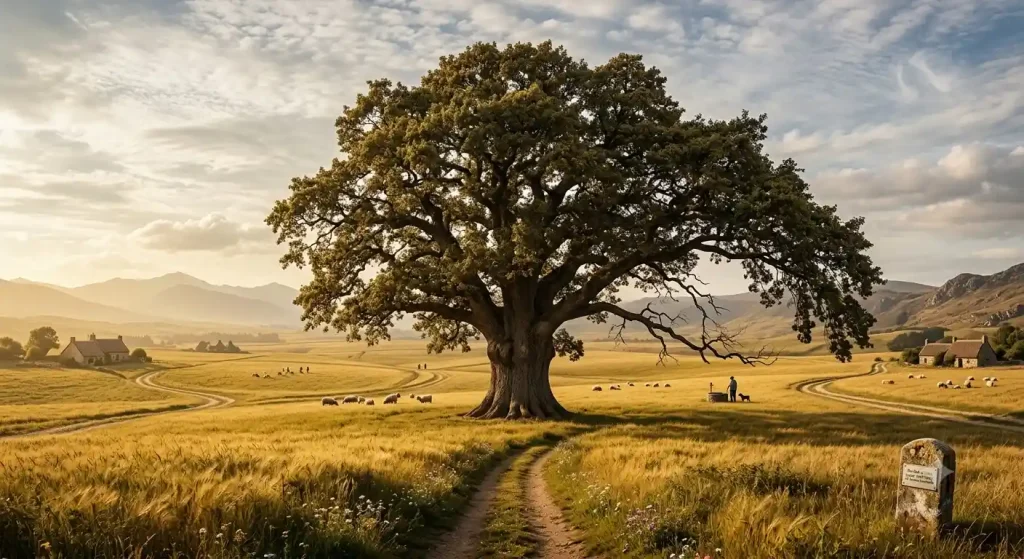
Why Crowding Hurts Fruit Trees More Than Others
Crowded fruit trees compete for light in a way that directly reduces fruiting wood, since fruit generally forms on branches that receive adequate sun exposure. A crowded orchard often looks full and healthy from a distance while actually producing significantly less fruit per tree than a properly spaced one. The Tree Value Calculator is worth checking if you’re weighing whether an established but overcrowded tree is worth keeping and thinning around, versus removing to give neighboring trees more room.
Pruning as an Ongoing Part of Spacing
Even well spaced fruit trees need regular pruning to maintain productive shape and manage size, especially standard rootstocks that can otherwise outgrow their space over time. The Tree Trimming Cost Calculator can help you budget for this ongoing maintenance, which is a real part of fruit tree ownership rather than a one time cost at planting.
Weight Considerations for Larger Fruit Trees
Mature pecans and standard apple trees carry significant limb weight, especially during a heavy fruiting year, and the Tree Weight Calculator can give you a sense of just how much load a large fruit tree’s structure needs to support, which is part of why spacing that allows for strong, well developed branch structure matters beyond just sunlight access.
Getting the Full Picture
Our Tree Removal Cost Calculator and Tree Age Calculator are useful if your fruit tree planning also involves removing an older, unproductive tree to make room for a better spaced layout.
For the broader framework on spacing and planting strategy, see our fruit tree spacing calculator guide.
Related Reading
- Tree Planting Cost: What to Budget Per Tree covers what to expect to pay per tree once your spacing plan is finalized.
- How Far Apart Should You Plant Trees? Spacing Guide by Purpose is useful background if you’re planning a mixed planting that includes both fruit and ornamental or shade trees.
- Carbon Offset Tree Planting: How Much Does It Actually Cost? is less directly related to fruit trees but relevant if part of your planting goals include broader environmental impact alongside yield.
FAQ
How far apart should dwarf apple trees be planted?
Dwarf apple trees typically need 6 to 10 feet of spacing, depending on the specific rootstock and how tightly you’re willing to manage pruning over time.
Do citrus trees need more space than apple trees?
It depends on the variety and rootstock. Standard citrus often needs similar or slightly more space than semi dwarf apples, while dwarf citrus can be planted much closer together.
Why do pecan trees need so much more space than other fruit trees?
Pecans grow into very large trees, often 70 feet or taller with a wide canopy spread, so they simply require significantly more room than smaller fruit bearing species.
Does tree spacing affect how much fruit I get?
Yes, significantly. Crowded trees receive less direct sunlight on their branches, which reduces fruiting wood and overall yield even if the trees otherwise look healthy.