
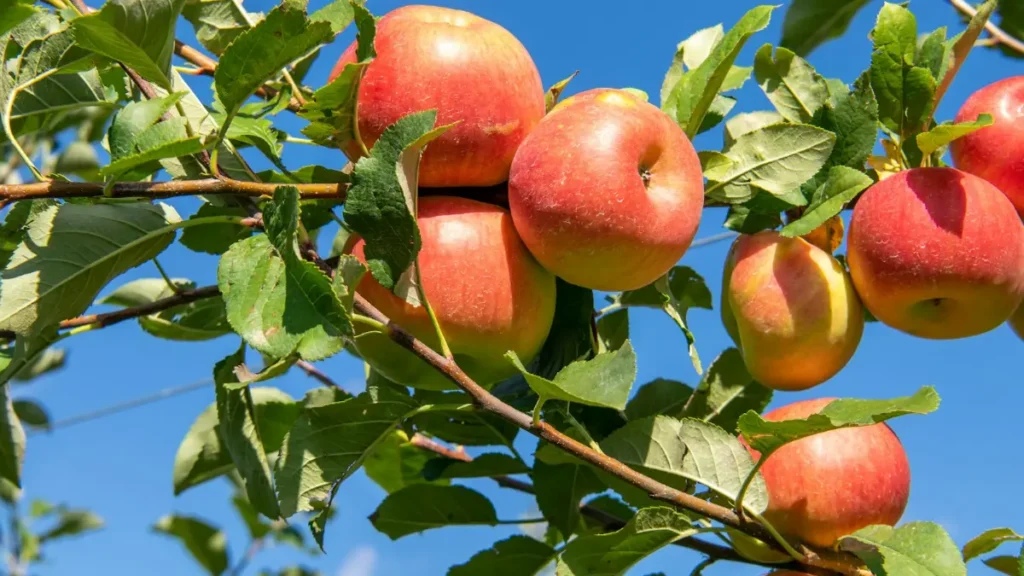
An apple tree can give you decades of fruit, but many backyard apple trees end up overgrown, diseased or simply unwanted. Fallen fruit draws wasps, old trees become hollow and brittle, and fire blight can kill a tree in a few seasons.
This guide covers how big apple trees get, the main problems to watch for, when it makes sense to remove an apple tree, and what apple tree removal costs in 2026.
How Big Do Apple Trees Get?
Apple tree size depends mostly on the rootstock the variety was grafted onto. eXtension’s apple experts give these approximate heights:
| Apple tree type | Approximate mature height | Notes |
|---|---|---|
| Dwarf | 6–12 ft | About 30–60% of standard size |
| Semi-dwarf | 14–22 ft | About 60–90% of standard size |
| Standard (seedling rootstock) | About 30 ft unpruned (about 24 ft pruned) | Old farmstead and wild trees |
Most backyard apple trees are under 30 feet, which keeps removal costs lower than for big shade trees.
Common Apple Tree Problems
Fire Blight
Fire blight is a bacterial disease of apples, pears, crabapples and related plants. University of Minnesota Extension lists the signs:
- Shepherd’s crook: young shoots wilt and bend over, “forming the characteristic hook.”
- Scorched look: “Trees with multiple infected shoots may appear scorched by fire.”
- Ooze: cream to light-yellow droplets on branches, shoots or fruit in humid weather.
- Cankers: sunken, dark bark with reddish-brown wood beneath.
UMN advises cutting infected shoots at least 12 inches below the infection during the growing season, or pruning larger branches in late winter. It warns that once fire blight reaches the main trunk, the tree likely can’t be cured. In that case, removing the entire tree and stump is generally best, since it removes a source of bacteria for nearby plants.
Insects and Fallen Fruit
Codling moth (the “worm in the apple”), apple maggot and other pests can ruin a crop. The University of Massachusetts recommends that growers “remove abandoned apple and pear trees, where practicable,” because neglected trees keep pest populations going. Dropped fruit also draws wasps, bees and wildlife, and stains patios.
Old Age and Decay
Old standard apple trees often develop hollow trunks, cracked crotches and heavy, leaning limbs. A tree that is mostly dead wood or splitting at the trunk is a hazard, not just an eyesore. See dead tree removal cost and our guide on how to fell a leaning tree.
Should You Remove an Apple Tree?
Prune and keep it if the trunk is sound and problems are limited to some branches. Renovation pruning over two or three years can bring an old tree back into shape; see tree trimming vs. pruning.
Remove it if:
- Fire blight has reached the trunk or killed much of the crown.
- The trunk is split, hollow or rotting at the base.
- It is an abandoned tree you don’t plan to spray or harvest, and it’s feeding pests and wasps.
- It is too close to the house or blocking a space you need.
Our guide on when to remove a tree instead of treating it walks through the decision.
How Much Does Apple Tree Removal Cost?
Because most apple trees are under 30 feet, removal usually falls in the lowest price band. Lawn Love’s 2026 averages by height:
| Apple tree size | Typical removal cost (2026) |
|---|---|
| Dwarf or semi-dwarf, up to 30 ft | $285 – $435 |
| Large standard tree, 30–60 ft | $435 – $870 |
| Stump removal (added cost) | $180 – $525 |
National averages; local prices vary.
What affects the price:
- Access. Trees in fenced backyards or near sheds and houses take more time.
- Condition. Rotten or split trees need careful rigging, and dead wood can be unpredictable.
- Number of trees. Removing several orchard trees at once usually lowers the price per tree.
- Stump and roots. Grind the stump if you plan to replant; price it with the stump removal cost calculator.
Save money: keep the wood. Apple wood is popular for smoking meat and as firewood, so ask the crew to leave it cut to length. See small tree removal cost, get a quick figure from the tree removal cost calculator or compare species with the cost by size and type calculator. Browse other species in the tree species guide.
Frequently Asked Questions
How tall do apple trees grow?
Dwarf apple trees reach about 6 to 12 feet, semi-dwarfs about 14 to 22 feet, and standard trees about 30 feet if not pruned.
What does fire blight look like on an apple tree?
Shoot tips wilt into a shepherd’s crook shape, leaves and blossoms turn brown or black and stay on the tree, and the tree can look scorched by fire. Cream-colored ooze may appear in humid weather.
Can an apple tree with fire blight be saved?
Often, if the infection is limited to shoots and branches that can be pruned out well below the damage. If it reaches the main trunk, University of Minnesota Extension says the tree likely can’t be cured and should be removed with its stump.
Should I remove an abandoned apple tree?
If you won’t care for it, removal is often wise. University of Massachusetts recommends removing abandoned apple and pear trees where practical, since they keep pests like codling moth going.
How much does it cost to remove an apple tree?
Most apple trees cost about $285 to $435 to remove, since they are usually under 30 feet tall. Large standard trees cost about $435 to $870, plus $180 to $525 for stump removal.
Sources: eXtension Apples, Understanding Apple Tree Size: Dwarf, Semi-Dwarf and Standard · University of Minnesota Extension, Fire Blight · University of Massachusetts, Apple IPM: Codling Moth · Lawn Love, How Much Does Tree Removal Cost? (2026)
Last updated: November 20, 2026.