
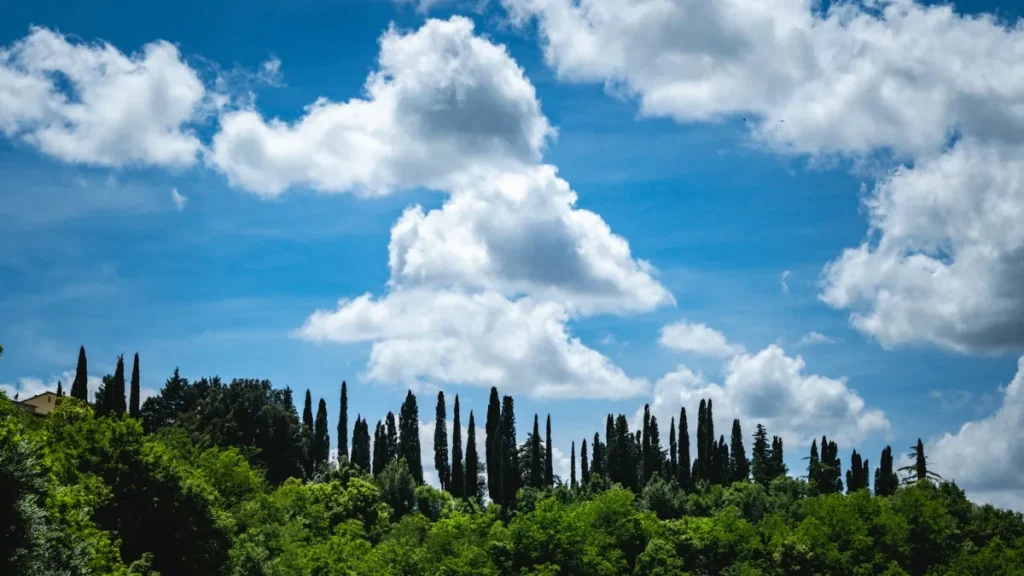
“Cypress” covers several very different trees. Leyland cypress is the fast-growing privacy screen planted in rows across many U.S. yards. Bald cypress is a tall native tree of swamps and riversides that loses its needles in winter. Italian cypress is the narrow column seen in Mediterranean-style gardens.
The most common reason homeowners search for cypress is browning, and with Leyland cypress, browning often ends in removal. This guide covers the main types, why cypress turn brown, when to remove them and what cypress removal costs in 2026.
Common Types of Cypress Trees
| Cypress | Typical mature size | Key notes |
|---|---|---|
| Leyland cypress | 60–70 ft tall, 10–15 ft wide | Fast privacy screen; disease-prone; 20–50 year life |
| Bald cypress | 50–70 ft tall, 20–30 ft wide | Native; deciduous needles; tolerates wet soil |
| Italian cypress | Tall, very narrow column | Warm, dry climates; poor drainage tolerance |
Sources: NC State Extension and Utah State University Extension (linked below).
Leyland Cypress
NC State Extension lists Leyland cypress at 60 to 70 feet tall and 10 to 15 feet wide. It grows fast, up to 3 feet a year when young, and has been known to reach about 50 feet in 15 years. That speed is why it is planted as an instant screen, but NC State calls it “severely pest- and disease-prone,” notes its roots are shallow so large trees tend to topple, and gives a typical lifespan of 20 to 50 years. The foliage can irritate skin, so wear gloves when trimming.
Bald Cypress
NC State Extension lists bald cypress at 50 to 70 feet tall and 20 to 30 feet wide. It looks like an evergreen in summer but drops its needles in fall, hence “bald.” Near water it grows knobby “cypress knees” from its roots. It “has been known to tolerate flooded conditions for extended periods,” and NC State rates it resistant to fire, wind and storm damage.
Italian Cypress
Utah State University Extension describes Italian cypress as a tall tree with a “narrow, columnar canopy” that is “not very cold-hardy” and suited mainly to warm, dry climates. It has low tolerance for poor drainage and is not a good choice under power lines.
Cypress are often confused with cedars and junipers. If yours has scaly, fan-like foliage, compare it with our cedar tree guide, or browse the tree species guide.
Why Is My Cypress Tree Turning Brown?
Seiridium Canker (Leyland Cypress)
University of Georgia Extension calls Seiridium canker likely the most damaging disease of Leyland cypress in Georgia landscapes. Look for “yellowing or browning of the foliage on one or more top or lateral branches,” often with sunken cankers that ooze resin.
Botryosphaeria Canker
Bot canker causes similar dieback. UGA lists rust-colored branches and sunken cankers at the base of dead shoots as early signs.
Drought Stress
Drought makes both diseases worse. UGA says Seiridium cankers “enlarge up to three times faster on drought stressed trees than on adequately irrigated trees.” Shallow-rooted Leylands suffer quickly in hot, dry spells.
Root Rot and Bagworms
NC State lists Phytophthora and Armillaria root rot, which are worse in poorly drained soil, and bagworms, which “can defoliate an entire tree in a matter of a few weeks.”
Normal Needle Drop
Not all browning is a problem. Bald cypress turns orange or cinnamon-brown every fall before dropping its needles, and evergreen cypress shed some old inner foliage each year.
Can a Browning Cypress Be Saved?
Sometimes, if the damage is limited. UGA’s advice:
- Prune out cankered branches and destroy them, disinfecting tools between cuts.
- Water deeply every 7 to 14 days in hot, dry weather and mulch out past the lowest limbs.
- Give trees space. Crowded rows get more disease.
Fungicides don’t help much: UGA says they “provide no control once an infection has taken place” for Seiridium, and none are recommended for Bot canker. NC State describes both cankers and root rots as incurable. UGA recommends removing trees that are extensively damaged or have cankers on the main trunk. Brown cypress foliage does not grow back, so a tree that is mostly brown will not recover its looks.
Removing a Cypress Hedge or Row
Leyland cypress are usually planted in rows, so removal is often priced per tree or for the whole screen. Ask for:
- One price for the full row, including stump grinding for every tree.
- Chipping on site to cut hauling costs.
- Replanting with a mix of species instead of one, so a single disease can’t wipe out the screen.
For mixed clearing jobs, see tree and bush removal.
How Much Does Cypress Tree Removal Cost?
HomeGuide lists $400 to $6,000 to remove a cypress tree, with typical mature heights of 50 to 80 feet. By height, Lawn Love’s 2026 averages are:
| Cypress tree size | Typical removal cost (2026) |
|---|---|
| Up to 30 ft | $285 – $435 |
| 30–60 ft | $435 – $870 |
| 60–80 ft | $870 – $1,160 |
| Over 80 ft | $1,160 – $2,000 |
| Stump removal (added cost) | $180 – $525 |
National averages; large bald cypress in wet ground or near buildings can cost far more.
What affects the price:
- Number of trees. A row of Leylands often gets a per-tree discount; see small tree removal cost for younger screens.
- Height and access. Tall bald cypress may need climbing or a crane; see large tree removal cost.
- Wet ground. Soft soil around bald cypress can keep heavy equipment out.
- Stumps. Grinding a whole row adds up; price it with the stump removal cost calculator.
Get a quick figure with the tree removal cost calculator or compare species with the cost by size and type calculator.
Frequently Asked Questions
Why is my Leyland cypress turning brown?
The most common causes are Seiridium and Botryosphaeria canker, both made worse by drought stress, plus root rot in wet soil and bagworms.
Will a brown cypress tree turn green again?
Brown foliage does not recover. Pruning out cankered branches and watering in dry spells can save a lightly affected tree, but heavily damaged trees should be removed.
How long do Leyland cypress trees live?
NC State Extension gives a typical lifespan of 20 to 50 years, depending on the site.
How much does it cost to remove a cypress tree?
HomeGuide lists $400 to $6,000. Most single cypress fall between $435 and $1,160 by height, plus $180 to $525 for the stump.
Is bald cypress an evergreen?
No. Bald cypress is a deciduous conifer. Its needles turn orange-brown and drop in fall.
Sources: NC State Extension, Leyland Cypress · NC State Extension, Taxodium distichum (Bald Cypress) · Utah State University Extension, Italian Cypress · University of Georgia Extension, Diseases of Leyland Cypress in the Landscape · HomeGuide, Tree Removal Cost · Lawn Love, How Much Does Tree Removal Cost? (2026)
Last updated: November 20, 2026.