
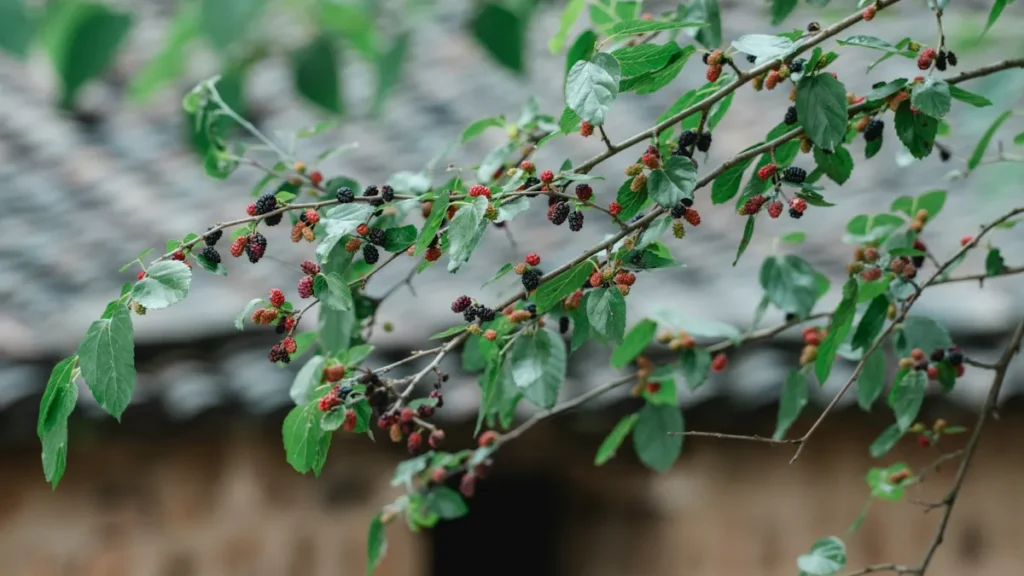
Mulberry trees grow fast, give dense shade and produce sweet berries that birds and people love. They also drop dark fruit that stains decks, cars and shoes, spread seedlings around the neighborhood, and, in the case of male “fruitless” trees, release so much pollen that some cities have banned planting them.
This guide covers the types of mulberry, the main problems, how to keep a cut mulberry from coming back and what mulberry tree removal costs in 2026.
Types of Mulberry Trees
| Mulberry | Notes |
|---|---|
| White mulberry (Morus alba) | Native to northern China; 30–50 ft; widely naturalized and invasive in some states |
| Red mulberry (Morus rubra) | Native North American species; less common; hybridizes with white mulberry |
| Fruitless mulberry | Male white mulberry trees grown for shade; no fruit, heavy pollen |
White Mulberry
University of Minnesota Extension describes white mulberry as a medium-sized tree “reaching 30 to 50 feet tall at maturity,” with a crown about as wide as it is tall. Its fruit, which looks like an elongated blackberry, ranges from white to deep purple.
University of Maryland Extension says white mulberry is native to northern China and was brought over in colonial times to start a silk industry. The silkworms did poorly, but the tree thrived. A single tree can produce an estimated 20 million seeds, spread by animals that eat the fruit.
Red Mulberry and Hybrids
Red mulberry is the native North American species. UMN Extension notes that “white and red mulberry can cross-pollinate, resulting in a hybrid species,” and UMD says these hybrids are closer to white mulberry, which threatens pure red mulberry.
Fruitless Mulberry
“Fruitless” mulberries are male trees, sold for fast shade without the berry mess. The catch is pollen.
Mulberry Pollen and Planting Bans
Male mulberries release large amounts of airborne pollen in spring. The City of Phoenix code (Sec. 39-9) states: “No male mulberry tree (Morus alba) or olive tree (Olea europea) shall be sold or planted in the City of Phoenix,” declaring it a public nuisance because of pollen. Pollenless varieties are exempt. Check your own city’s code before planting a mulberry.
Fruit Mess and Seedlings
Fruiting mulberries drop ripe berries over several weeks in early summer. The dark juice stains concrete, decks, cars and clothing, and the fruit attracts birds, whose droppings spread seeds and stains even further. Expect mulberry seedlings in flower beds, along fences and under trees where birds perch.
Ways to manage it:
- Avoid planting fruiting mulberries near patios, drives and parking areas.
- Pull seedlings while small. UMD recommends pulling them as soon as they appear.
- Prune for size, but heavy pruning will not stop fruiting.
Is White Mulberry Invasive?
In many places, yes. UMN Extension says white mulberry has “escaped cultivation,” often overtakes areas and outcompetes native mulberry. It is restricted in Wisconsin and Ohio and prohibited in Indiana, though not regulated in Minnesota. Check your state’s list before planting.
How to Stop a Mulberry Stump From Regrowing
Mulberry is a vigorous tree, and cut trees can sprout from the stump. UMD’s advice for mature trees: cut during the growing season, then immediately apply herbicide to the stump, which “destroys the root system.” Use a product labeled for woody plants and follow the label. Grinding the stump is the non-chemical option. See how to kill a tree stump and the stump removal cost calculator.
Should You Remove a Mulberry?
Keep it if it gives shade you want, is away from hard surfaces, and the fruit or pollen isn’t a problem.
Consider removal if:
- Fruit drop is staining patios, drives or cars every summer.
- A male tree’s pollen is a problem for allergy sufferers in the house.
- It is an unwanted volunteer seedling growing in a fence line or against a building.
- Large limbs are cracked, decayed or hanging over the roof.
How Much Does Mulberry Tree Removal Cost?
Most mulberries are 30 to 50 feet tall, so they usually fall in the low-to-medium range. Lawn Love’s 2026 averages by height:
| Mulberry tree size | Typical removal cost (2026) |
|---|---|
| Up to 30 ft | $285 – $435 |
| 30–60 ft (most mature mulberries) | $435 – $870 |
| Stump removal (added cost) | $180 – $525 |
National averages; local prices vary.
What affects the price:
- Multi-trunk trees. Mulberries often grow several trunks, each needing to be cut and lowered.
- Fences and buildings. Volunteer mulberries along fence lines take more careful work.
- Stump treatment or grinding. Budget for it so the tree doesn’t sprout back.
- Cleanup. Ask whether chipping and hauling are included; see cost to haul away tree branches.
Small volunteer mulberries may cost less; see small tree removal cost. For a quick number, use the tree removal cost calculator or compare species with the cost by size and type calculator. Browse other species in the tree species guide.
Frequently Asked Questions
What is a fruitless mulberry?
A male white mulberry tree. It produces no fruit but releases a lot of pollen in spring, which is why some cities, including Phoenix, ban planting male mulberries.
Is white mulberry invasive?
It has escaped cultivation across the U.S. and is restricted or prohibited in some states, including Wisconsin, Ohio and Indiana, according to University of Minnesota Extension.
How do I stop a mulberry tree from growing back?
Grind the stump, or cut the tree during the growing season and immediately treat the stump with a labeled herbicide, as University of Maryland Extension recommends.
How tall do mulberry trees get?
White mulberry usually reaches 30 to 50 feet, with a crown about as wide as it is tall.
How much does it cost to remove a mulberry tree?
Most mulberry removals cost about $285 to $870 by height, plus $180 to $525 for the stump, based on Lawn Love’s 2026 national figures.
Sources: University of Minnesota Extension, White Mulberry · University of Maryland Extension, Invasives in Your Woodland: White Mulberry · City of Phoenix Code, Sec. 39-9 Airborne Pollens · Lawn Love, How Much Does Tree Removal Cost? (2026)
Last updated: November 20, 2026.