
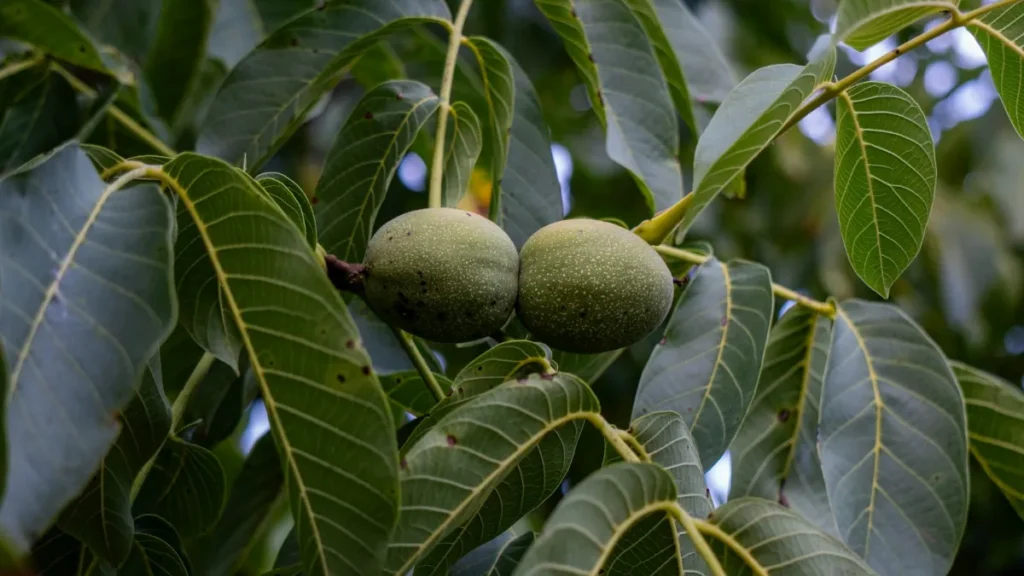
A walnut tree is one of the most valuable trees a homeowner can have, and one of the hardest to garden around. Black walnut wood is prized by sawmills, but the tree also releases a natural chemical called juglone that stunts tomatoes, peppers and many shrubs. Add messy, staining nuts and a serious disease spreading in some states, and many owners end up asking whether to keep or remove it.
This guide covers the main types of walnut, juglone, common problems, what a walnut tree may be worth, and what walnut tree removal costs in 2026.
Black Walnut vs. English Walnut
| Walnut | Typical mature size | Key notes |
|---|---|---|
| Black walnut (Juglans nigra) | 50 to 90 ft tall, 50 to 70 ft wide | Native to central and eastern North America; valuable timber |
| English (Persian) walnut (Juglans regia) | 40 to 60 ft tall and wide | Grown mainly for nuts; native to Europe and Central Asia |
Sizes from NC State Extension (linked below).
Black Walnut
NC State Extension describes black walnut as a tree “50 to 90 feet high” with a “3 to 6 foot diameter trunk” when mature, “native to a broad swath of central and eastern North America.” It grows quickly. Its nuts ripen in October inside a thick green husk that “heavily stains skin and clothing.”
English (Persian) Walnut
English walnut, also sold as Persian walnut, is the tree grown for the walnuts sold in stores. NC State Extension lists it at 40 to 60 feet tall with a similar spread, native to Europe and Central Asia. Its roots also produce juglone, which NC State says is “toxic to other plants.”
Juglone: Why Plants Die Under Walnut Trees
University of Wisconsin–Madison Extension explains that black walnut produces juglone, found “especially in buds, nut hulls and roots.” Key points:
- Reach. “The toxic effects of a mature black walnut tree can extend 50 to 80 feet from the trunk,” with the strongest effect inside the dripline.
- Sensitive plants. Tomato, potato, eggplant and pepper, plus ornamentals such as lilac, peony, rhododendron and azalea.
- Tolerant plants. Beans, beets, carrots, corn, melons, onions, squash, and trees such as oaks, catalpa and black locust.
- After removal. Removing the tree does not clear the soil at once. Root pieces “may continue to exude toxins for several years as they decay.”
UW–Madison also advises against using walnut bark and wood as mulch. If you remove a walnut to make room for a vegetable garden, plan to wait, use raised beds, or grow tolerant crops for a few years.
Common Walnut Tree Problems
Thousand Cankers Disease
Thousand cankers disease (TCD) is caused by a fungus (Geosmithia morbida) carried by the tiny walnut twig beetle, as Colorado State University Extension explains. Washington State University lists the first visible signs as “yellowing leaves, thinning or flagging foliage in the crown,” though the disease is usually well advanced by then. Small cankers merge and girdle branches until the tree dies.
WSU says there are no known effective chemical controls once a tree is infected and none recommended for home use. In affected areas, do not move raw walnut wood, and chip infested material. NC State notes black walnut is “under pressure in some areas from thousand cankers disease.”
Other Problems
NC State lists anthracnose, bacterial blight, root rot, cankers, leaf spot and shoot dieback, plus aphids, fall webworm and leaf-eating caterpillars. Walnuts also drop leaves through the season and drop heavy nuts in fall, which stain driveways and can roll underfoot. NC State flags walnut as a problem plant for dogs and horses.
Is My Walnut Tree Worth Money?
Sometimes. The Missouri Department of Conservation says the highest-value walnut logs are large, straight and free of defects. Top veneer grade needs a trunk at least 19 inches in diameter, measured 4.5 feet up, and at least 9 feet of clear trunk. MDC estimated a 19-inch grade A veneer tree at about $700 to $800 at the time.
Yard trees are usually worth much less:
- Open-grown trees have low limbs and more defects, so MDC says they often value similarly to a good forest-grown oak.
- Trees near houses are risky for loggers and more likely to hide metal or other blade-damaging items.
If you have a large, straight walnut, MDC’s advice is to hire a consulting forester, measure the tree, and get bids from several buyers with a written contract. Even a modest log sale can offset part of the removal bill. Estimate a tree’s landscape value with our tree value calculator and measure the trunk with the DBH calculator.
Should You Remove a Walnut Tree?
Consider keeping it if it is healthy, well away from buildings and gardens, and you can live with the nuts.
Consider removal if:
- It shows signs of thousand cankers disease or major dieback.
- Large limbs hang over the house, driveway or power lines.
- You need the space for a vegetable garden or juglone-sensitive plants.
- It is dead or leaning. Dead trees get more dangerous and more expensive to remove over time.
Our guide on when to remove a tree instead of treating it walks through the decision.
How Much Does Walnut Tree Removal Cost?
Black walnuts often reach 50 to 90 feet, so removal usually falls in the medium-to-large range. Lawn Love’s 2026 prices by height:
| Walnut tree size | Typical removal cost (2026) |
|---|---|
| Young walnut, up to 30 ft | $285 – $435 |
| Medium walnut, 30–60 ft | $435 – $870 |
| Mature walnut, 60–80 ft | $870 – $1,160 |
| Very large walnut, over 80 ft | $1,160 – $2,000 |
| Stump removal (added cost) | $180 – $525 |
National averages by height from Lawn Love; local prices vary.
What pushes the price up:
- Size and trunk diameter. A 3- to 6-foot trunk takes more cutting and hauling. See large tree removal cost.
- Access and targets. Trees over houses or wires may need climbing, rigging or a crane; see crane tree removal cost.
- Debris. Walnut wood is heavy. Ask whether the quote includes hauling, or whether a sawmill or woodworker will take the logs.
- Stump and roots. Grinding is usually extra; price it with the stump removal cost calculator.
Ways to lower the net cost: ask the tree service to leave long, straight trunk sections uncut so you can sell them, keep the wood for a woodworker, and get at least three quotes. Our guide to tree removal estimates shows what to check. For a quick number, use the tree removal cost calculator, or compare species with the cost by size and type calculator.
Frequently Asked Questions
Why won’t anything grow under my walnut tree?
Walnuts release juglone, mainly from roots, buds and nut hulls. It stunts sensitive plants such as tomatoes, peppers, potatoes, peonies and azaleas up to 50 to 80 feet from a mature black walnut.
How long does juglone stay in the soil after a walnut is removed?
Decaying root pieces can keep releasing juglone for several years, according to University of Wisconsin–Madison Extension. Use raised beds or tolerant plants in the meantime.
Is a black walnut tree worth money?
Large, straight forest-grown trees can be valuable. Yard trees often have low limbs, defects or hidden metal, so they are usually worth much less. A consulting forester can tell you if a sale is worthwhile.
How much does it cost to remove a walnut tree?
Most walnut removals cost about $435 to $1,160 depending on height, with very large trees up to about $2,000 and stump removal an extra $180 to $525, based on Lawn Love’s 2026 national figures.
Can thousand cankers disease be cured?
No. Washington State University says there are no effective chemical controls once a tree is infected. Heavily affected trees are usually removed, and the wood should be chipped or kept local.
Sources: NC State Extension, Juglans nigra (Black Walnut) · NC State Extension, Juglans regia (English Walnut) · University of Wisconsin–Madison Extension, Black Walnut Toxicity · Colorado State University Extension, Thousand Cankers Disease of Walnut Q&As · Washington State University HortSense, Walnut: Thousand Cankers Disease · Missouri Department of Conservation, Selling Walnut Timber · Lawn Love, How Much Does Tree Removal Cost? (2026)
Last updated: November 20, 2026.