
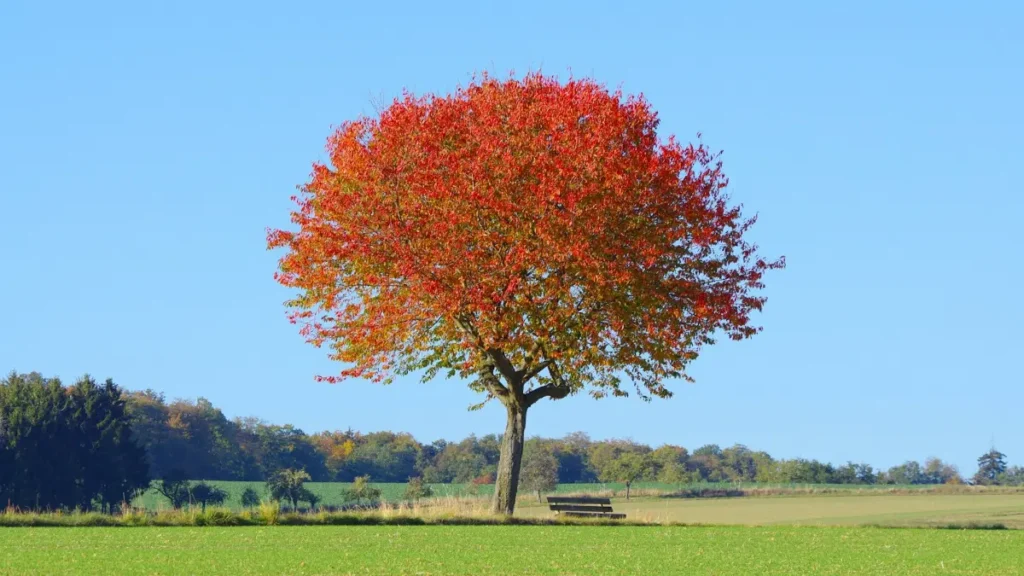
Hickories are big, tough native hardwoods with striking bark, golden fall color and wood prized for tool handles and smoking meat. They also drop heavy nuts that can dent cars, and the hickory bark beetle can kill a tree within weeks of attack.
This guide covers how big hickory trees get, the main problems, when removal makes sense and what hickory tree removal costs in 2026.
How Big Do Hickory Trees Get?
Shagbark hickory (Carya ovata), named for its long, peeling strips of bark, is the best-known species. The USDA Forest Service says it typically grows 70 to 80 feet tall and can reach about 130 feet. The University of Florida IFAS lists it at 60 to 80 feet tall with a 25- to 35-foot spread.
Other common hickories include pignut, mockernut and shellbark, plus the pecan, which is also a hickory.
Where Hickory Grows
The USDA Forest Service says shagbark hickory grows across most of the eastern U.S., from Minnesota and Nebraska east to Maine and south to Georgia, Mississippi and eastern Texas.
Deep Taproot
Hickory seedlings put most of their early growth into a large, deep taproot, which can reach 2 to 3 feet in the first three years. UF IFAS notes the tree is “somewhat difficult to transplant due to a coarse root system.” That deep root system also makes hickory stumps harder to dig out than many trees.
Hickory Nuts
Hickories ripen nuts in September and October and drop them through December. Good crops come every 1 to 3 years. UF IFAS warns the nuts “can damage cars when they fall from the tree,” and recommends not planting hickories near streets or parking areas. Expect squirrels, plus husks and shells to clean up off lawns and patios.
Common Hickory Tree Problems
Hickory Bark Beetle
The USDA Forest Service calls the hickory bark beetle “the most important insect enemy of hickory and other hardwoods in the Eastern United States.” When beetles attack, the foliage turns red within weeks and the tree soon dies. Outbreaks during droughts can kill large numbers of trees.
Main sign: a crown that suddenly turns red or brown in summer. Have an arborist confirm the cause, and remove killed trees promptly.
Other Problems
UF IFAS lists aphids, twig girdlers, scales and caterpillars, and diseases including hickory anthracnose (leaf spot), witches’ broom, powdery mildew, cankers and Verticillium wilt.
Should You Remove a Hickory Tree?
Keep it if it is healthy and has room. UF IFAS recommends hickory as a specimen tree for open areas rather than tight yards.
Consider removal if:
- The crown has turned red or brown suddenly in summer (likely bark beetles).
- Large limbs are dead or the trunk has cankers or decay.
- Nut drop is damaging cars, roofs or a driveway.
- It is leaning or hanging over the house. See dead tree removal cost.
Our guide on when to remove a tree instead of treating it can help you decide.
How Much Does Hickory Tree Removal Cost?
Mature hickories are usually 60 to 80 feet tall. Lawn Love’s 2026 averages by height:
| Hickory tree size | Typical removal cost (2026) |
|---|---|
| Up to 30 ft | $285 – $435 |
| 30–60 ft | $435 – $870 |
| 60–80 ft | $870 – $1,160 |
| Over 80 ft | $1,160 – $2,000 |
| Stump removal (added cost) | $180 – $525 |
National averages; local prices vary.
What affects the price:
- Hard, heavy wood. Hickory wood is dense, which means slower cutting and heavier pieces to lower and haul.
- Size and targets. Large trees over houses may need rigging or a crane; see large tree removal cost.
- Stump and taproot. Grinding is the usual choice, since digging out a hickory’s deep root is hard; see the stump removal cost calculator.
Save money: the USDA Forest Service notes hickory burns with high heat and its charcoal gives food a smoked flavor. Ask the crew to leave the wood cut into rounds for firewood or smoking, which can also lower hauling costs. For a quick estimate, use the tree removal cost calculator or the cost by size and type calculator. For a similar hardwood, see our oak tree guide, or browse the tree species guide.
Frequently Asked Questions
How tall do hickory trees grow?
Shagbark hickory typically grows 60 to 80 feet tall and can reach about 130 feet, according to UF IFAS and the USDA Forest Service.
What kills hickory trees?
The hickory bark beetle is the most serious threat. The USDA Forest Service says infested trees’ leaves turn red within weeks and the trees soon die, especially during droughts.
Are falling hickory nuts dangerous?
They are heavy enough to dent cars, according to UF IFAS, which advises not planting hickories near streets or parking areas.
Is hickory wood worth keeping?
Yes. It burns very hot and is popular for smoking food. Keeping the wood can lower hauling costs on a removal job.
How much does it cost to remove a hickory tree?
Most mature hickories cost about $870 to $1,160 to remove (60 to 80 feet tall), plus $180 to $525 for stump removal, based on Lawn Love’s 2026 national averages.
Sources: USDA Forest Service, Silvics of North America: Shagbark Hickory · University of Florida IFAS, Carya ovata: Shagbark Hickory · Lawn Love, How Much Does Tree Removal Cost? (2026)
Last updated: November 20, 2026.